

Testing a newly installed China wheelchair lift is a crucial step to ensure its safety, functionality, and reliability. As a China Wheelchair Lift supplier, I understand the significance of thorough testing procedures to provide our customers with high - quality products. In this blog, I will share a comprehensive guide on how to test a newly installed China wheelchair lift.
Pre - test Preparations
Before starting the actual testing, some essential preparations need to be made. First, gather all the necessary tools such as a multimeter for electrical checks, a spirit level to ensure the lift is properly aligned, and a measuring tape to verify the dimensions. Review the installation manual provided with the lift carefully. This manual contains detailed information about the lift's specifications, recommended testing procedures, and safety precautions.
Inspect the installation site. Check for any signs of damage to the surrounding area, such as cracks in the floor or walls that might have occurred during the installation process. Ensure that there are no obstructions in the path of the lift's movement, both vertically and horizontally. Also, make sure that the power supply to the lift is stable and meets the requirements specified in the manual.
Visual Inspection
The first step in the testing process is a visual inspection. Examine the lift from top to bottom. Check the structural integrity of the lift, including the frame, platform, and support mechanisms. Look for any signs of loose bolts, nuts, or welds. A loose connection can compromise the safety of the lift and lead to malfunctions.
Inspect the cables or chains (if applicable) for any signs of wear, fraying, or damage. These components are critical for the proper operation of the lift, and any issues should be addressed immediately. Check the safety features such as the emergency stop button, safety sensors, and handrails. The emergency stop button should be easily accessible and in good working condition. The safety sensors should be clean and free from any debris that might interfere with their operation.
Electrical System Testing
The electrical system of the wheelchair lift is a vital part of its operation. Use a multimeter to check the voltage at the power source and at various points in the lift's electrical circuit. Ensure that the voltage is within the acceptable range specified in the manual. A voltage that is too high or too low can cause damage to the lift's electrical components.
Test the control panel. Press all the buttons on the control panel, including the up, down, and emergency stop buttons, to ensure that they are functioning correctly. The lift should respond promptly to the commands from the control panel. Check the indicator lights on the control panel to make sure they are working as expected. For example, the power indicator light should illuminate when the lift is powered on.
Mechanical Operation Testing
Once the visual and electrical inspections are complete, it's time to test the mechanical operation of the lift. Start by operating the lift in a slow and controlled manner. Observe the movement of the lift platform. It should move smoothly up and down without any jerks or vibrations. If there are any unusual noises during the operation, such as grinding or squeaking, it could indicate a problem with the mechanical components.
Test the lift's speed. The lift should operate at the speed specified in the manual. If the lift is moving too fast or too slow, it may need to be adjusted. Check the lifting capacity of the lift. Place a weight on the platform that is equivalent to the maximum rated capacity of the lift and operate the lift. The lift should be able to lift the weight safely and without any signs of strain.
Safety Feature Testing
Safety features are of utmost importance when it comes to wheelchair lifts. Test the emergency stop button by pressing it during the lift's operation. The lift should come to an immediate stop. Release the emergency stop button and try to operate the lift again to ensure that it resumes normal operation.

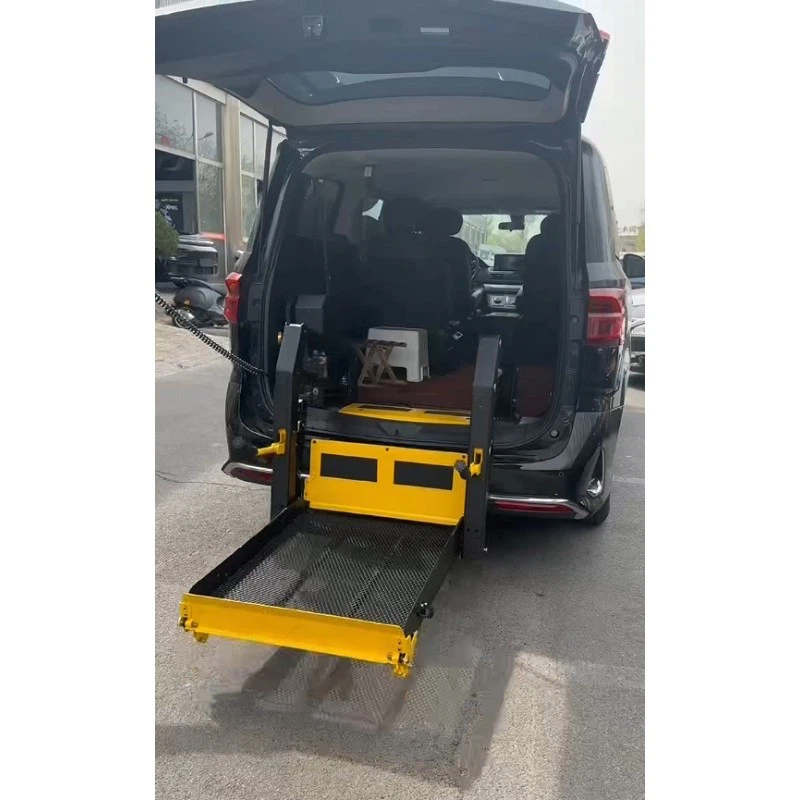
Test the safety sensors. These sensors are designed to detect obstacles in the path of the lift and stop the lift's operation to prevent collisions. Place an object in the path of the lift and operate the lift. The lift should stop before it comes into contact with the object. Clean the sensors regularly to ensure their proper functioning.
Stability Testing
A stable wheelchair lift is essential for the safety of the user. Use a spirit level to check the levelness of the lift platform. The platform should be level both horizontally and vertically. An unlevel platform can cause the wheelchair to tip over during the lifting process.
Test the stability of the lift by applying a lateral force to the platform while it is in the raised position. The lift should not sway or tip over. If there are any signs of instability, the installation may need to be re - evaluated and adjusted.
Compatibility Testing
If the wheelchair lift is designed for use with specific types of wheelchairs or mobility devices, it's important to test its compatibility. Place a representative wheelchair or mobility device on the lift platform and operate the lift. The wheelchair should fit securely on the platform, and there should be enough space around the wheelchair to prevent it from hitting the sides of the lift during the lifting process.
Long - term Testing
After the initial testing, it's a good idea to conduct long - term testing. Operate the lift multiple times over a period of several days or weeks to ensure its reliability. Monitor the lift for any signs of wear, fatigue, or malfunctions. Keep a record of the lift's operation, including the number of cycles, any issues that arise, and the actions taken to address them.
Conclusion
Testing a newly installed China wheelchair lift is a comprehensive process that involves visual inspections, electrical and mechanical system testing, safety feature testing, and long - term monitoring. By following these testing procedures, we can ensure that the lift is safe, functional, and reliable for our customers.
If you are interested in our China wheelchair lifts or have any questions about the testing process, please feel free to contact us for more information and to discuss your procurement needs. We are committed to providing high - quality products and excellent customer service.
As a leading supplier, we also offer a variety of other related products such as Wheelchair Lifts for Suv, Mobility Scooter Lift for Car, and Wheelchair Lift for Car.
References
- Installation and operation manuals of China wheelchair lifts.
- Industry standards and regulations for wheelchair lift safety and performance.


